
A week or two ago, I received a HolyIoT nRF54L15 DevKit and two modules that I ordered from AliExpress.
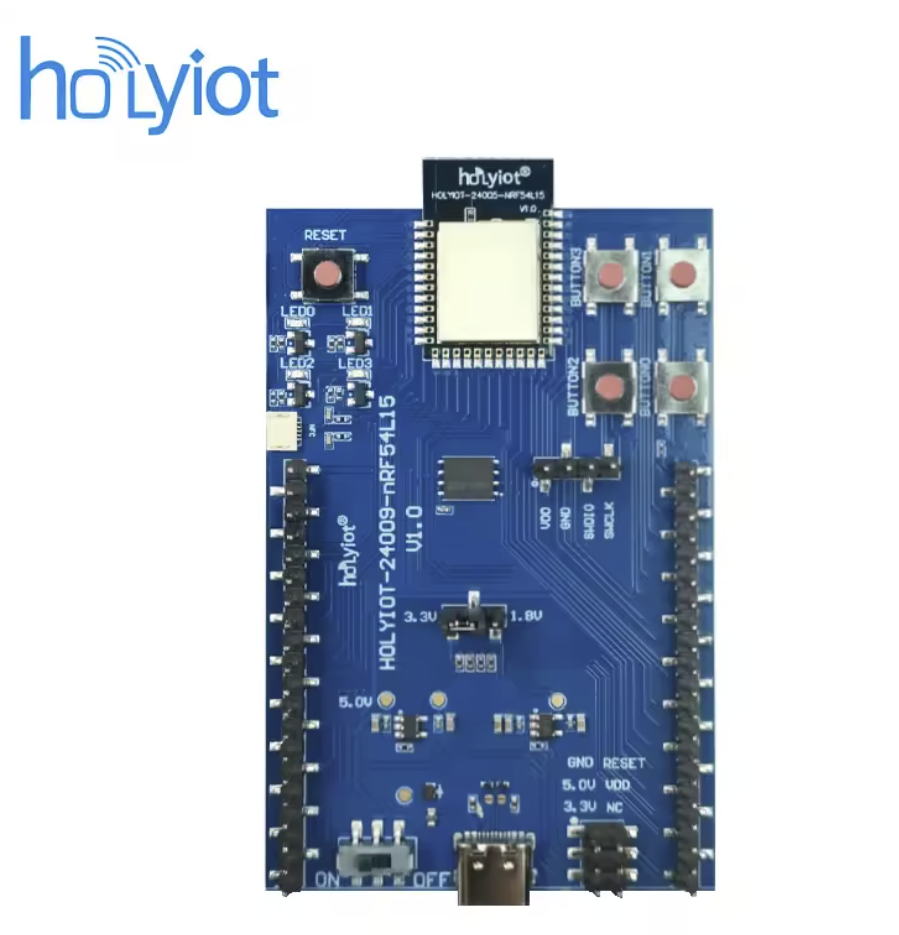
I’m trying to choose a module to use for my Matter Dual Temperature Sensor project. These modules seemed pretty good. They had castellated pins, meaning I could solder them and they didn’t cost the earth. The company also offered a DevKit, so this seemed like a good addition.
When I received them, I hooked them up and flashed them using my JLink device. You can read about that here
With the board working, I turned my attention to power consumption!
Being Naive!
I just assumed that I’d have a great out of the box power experience like I did with the nRF52840DK. Sadly, I was wrong!
I started with the system_off sample, which can be found here
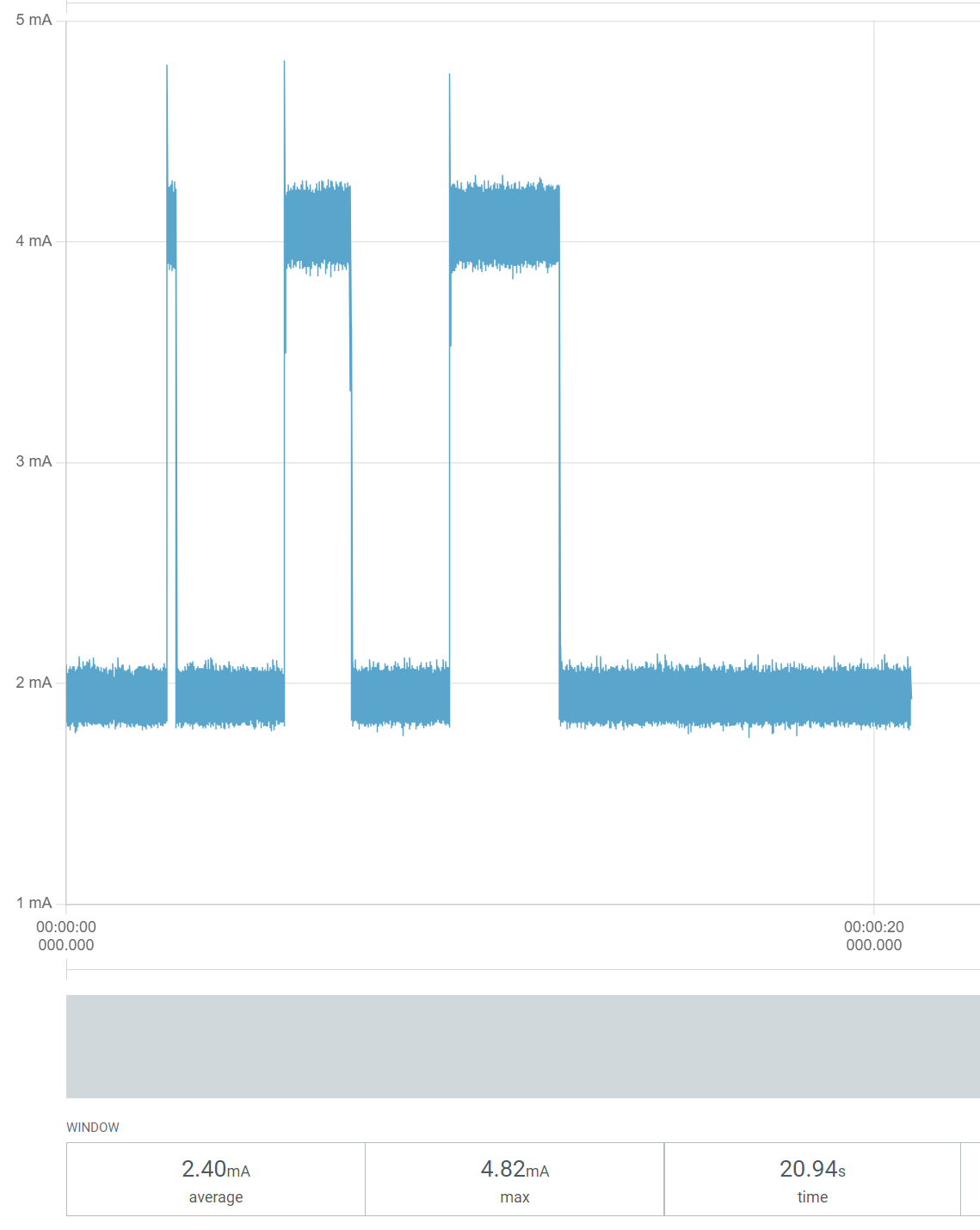
~/ncs/v3.1.0/zephyr/samples/boards/nordic/system_offThe power consumption was ridiculous!! As you can see in the diagram below, it sat at 2mA, expect for the 4mA peaks. These were the button presses to wake it up (describe in the sample)
I loaded the same code into the official nRF54L15 development kit and the results were a galaxy apart. The official board drew 1µA. As the specification said it should.
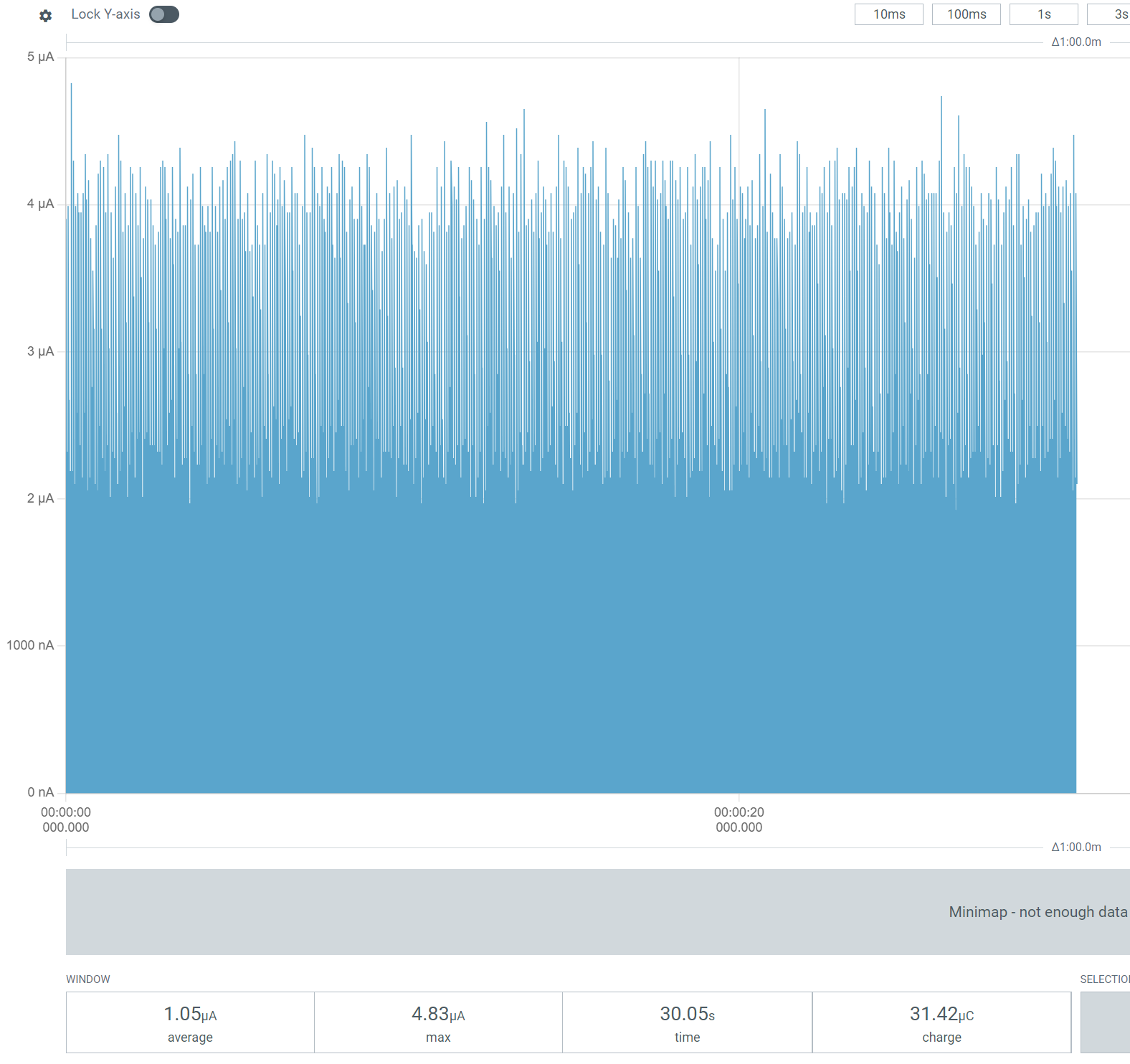
Pushing the button caused consumption to jump to around 3mA, which is accounted for by the LED.
2mA is what, 2 million times more than 1µA.
No help was forthcoming
In the system_off sample, I commented *everything out*, all but the call to sys_poweroff().
Consumption remained at 2mA. WTF? I was sure that would have made some difference!
Experience had taught me that I needed help at this point! I contacted HolyIoT and asked for help – a sample, anything at all!
Unfortunately, all I got back was a pointer to the system_off sample 😦
Giving Up
There was clearly some component on the dev kit or in their module that was drawing massive amounts of power.
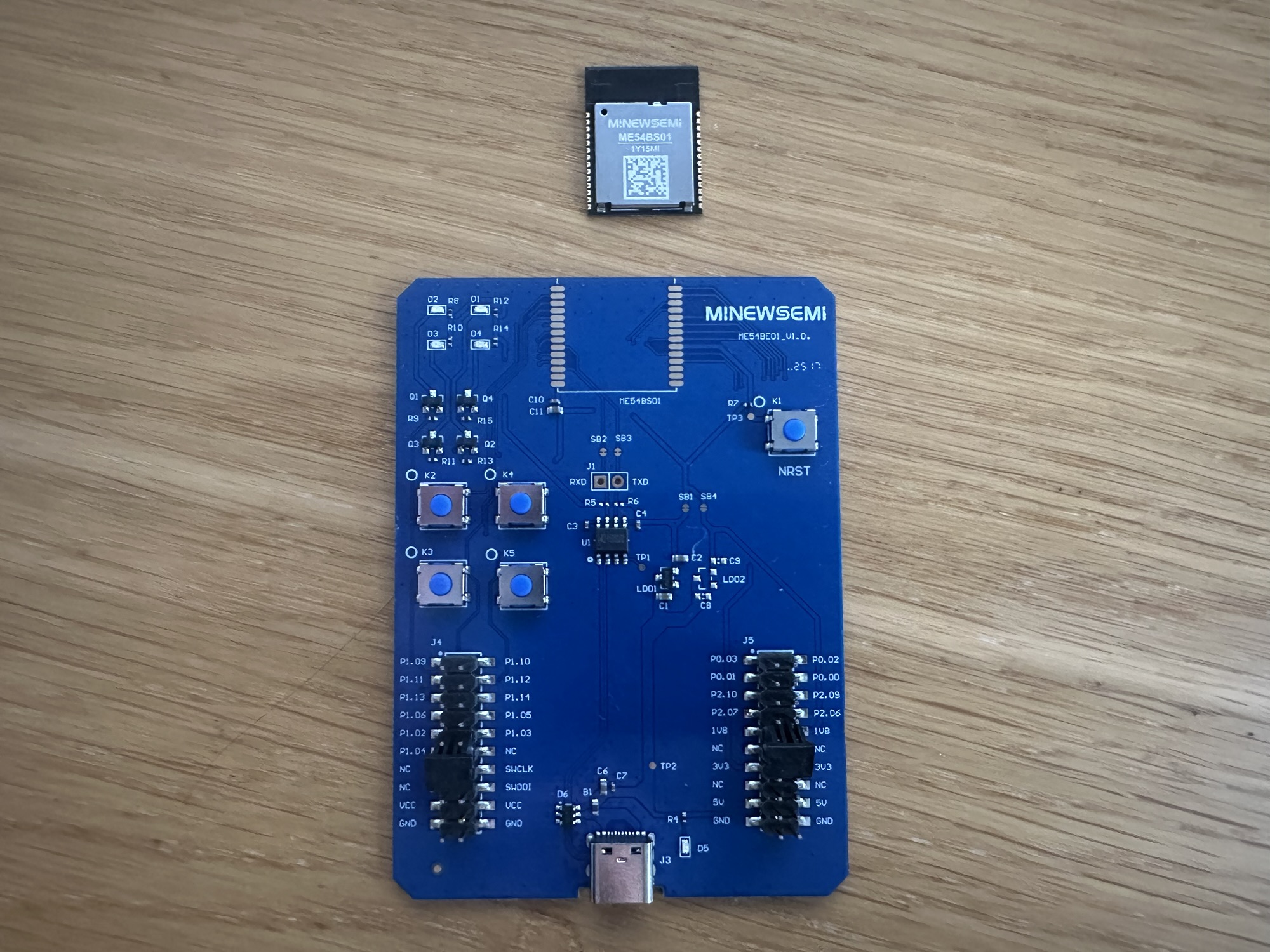
I don’t have the expertise, or time for that matter, to try and delve in any further. I will keep trying to get some answers from them. Until then, I’m going to see if I have more success with the Minewsemi module and DevKit
Did you like reading this post?
If you found this blog post useful and want to say thanks, you’re welcome to buy me a coffee. Better yet, why not subscribe to my Patreon so I can continue making tinkering and sharing.
Be sure to check out my YouTube Channel too – https://youtube.com/tomasmcguinness
Thanks, Tom!


 @tomasmcguinness
Leave a comment