
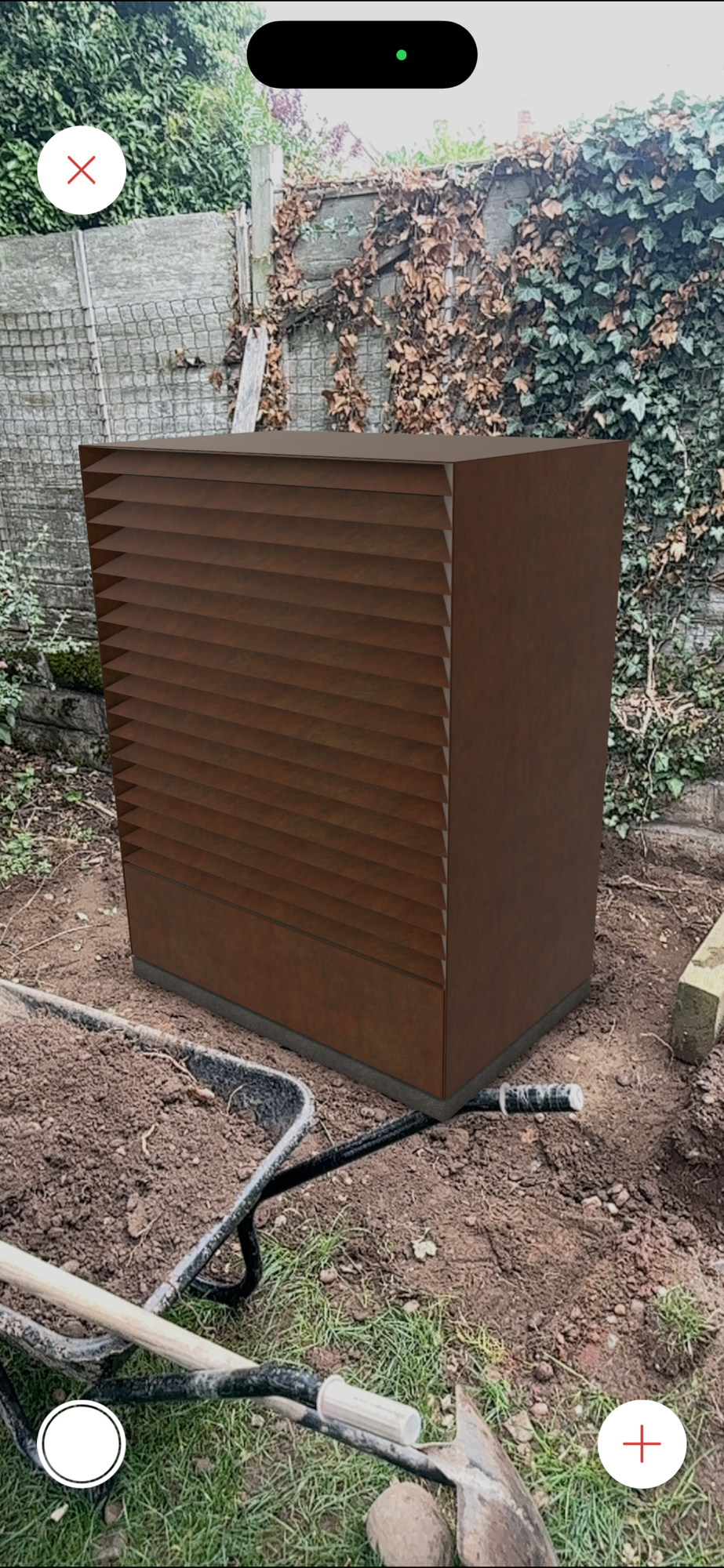
My ASHP heat pump is due to be installed in less than a month (Aug 2026)! I’m getting a Kronoterm Adapt to replace my big, stupid gas boiler.
Whilst the Kronoterm Adapt provides heating, it can also provide cooling. It does this by moving heat in the opposite direction, supplying cold water rather than hot water. I chose a heat pump capable of cooling because I knew I wanted to take advantage of that feature in the future. With two heat waves in the past four weeks here in the UK, I’d started to accelerate that process.
What are the options?
Unlike classic air conditioners, which heats or cools air directly (also called Air-to-Air heat pumps), my heat pump deals with water (Air-to-Water). Heating a house with hot water is easy, you just pass the hot water through the radiators. Cooling a house with radiators is *possible* but pointless.
The main issue: condensation
Air holds water vapour. If that air touches a surface below a certain temperature, called the dew point, the water will condense.
If you put cold water into a radiator on a hot day, water will condense on the radiator, which isn’t ideal. Radiators are also designed to warm air, not cool it down. You can keep the water temperature above the dew point, but that limits the cooling ever more. Sure, it’s dehumidifying the air (which helps), but you have to get rid of the water somehow.
Using the Under Floor Heating loop is another option, but you risk interstitial condensation developing in the floor unless you keep the water above the dew point. People have had success with this. A big slab of cold concrete is a great heat sink.
Another option is something called a fan coil. These are basically radiators with a fan attached, just the like the ones in combustion engines. If you have ever owned a petrol/diesel car, you’re probably familiar with this.
Hot water/coolant from the engine passes into tiny pipes and fins in the radiator. Air passes through the radiator (caused by the movement of the car or by a fan) and takes the heat away. The heat will flow from the hot water/coolant into the cooler air (2nd law of thermodynamics)
In my scenario, we swap things around. We blow the hot air through the radiator, and we pass cold water through the pipes and fins, which take the heat out of the air. Remember, heat always flows in one direction. In practical terms, we get the cold water from the ASHP. We suck in warm air (from the house), pass it through the radiator. This gives us colder air, which we then blow back into the house.
Options exist to replace individual radiators with fan coil versions, but the issue of condensation remains. I couldn’t use fan coil radiators upstairs for example, as all my copper pipe in the floors is uninsulated. This would result in drip, drip, drip until stains appeared on the ceilings!
Another approach, one I’m leaning towards, is to have a ducted fan coil. This is one large unit that goes into the loft. It uses ducts to pipe the cold air into the different rooms. Of course, we have to get the cold water into the loft. Luckily, I added a “channel” from my garage to my loft when I was renovating my bathroom. This is currently housing some Solar PV cables, but it is large enough to take two pipes. Failing that, we could go externally and into the loft that way.
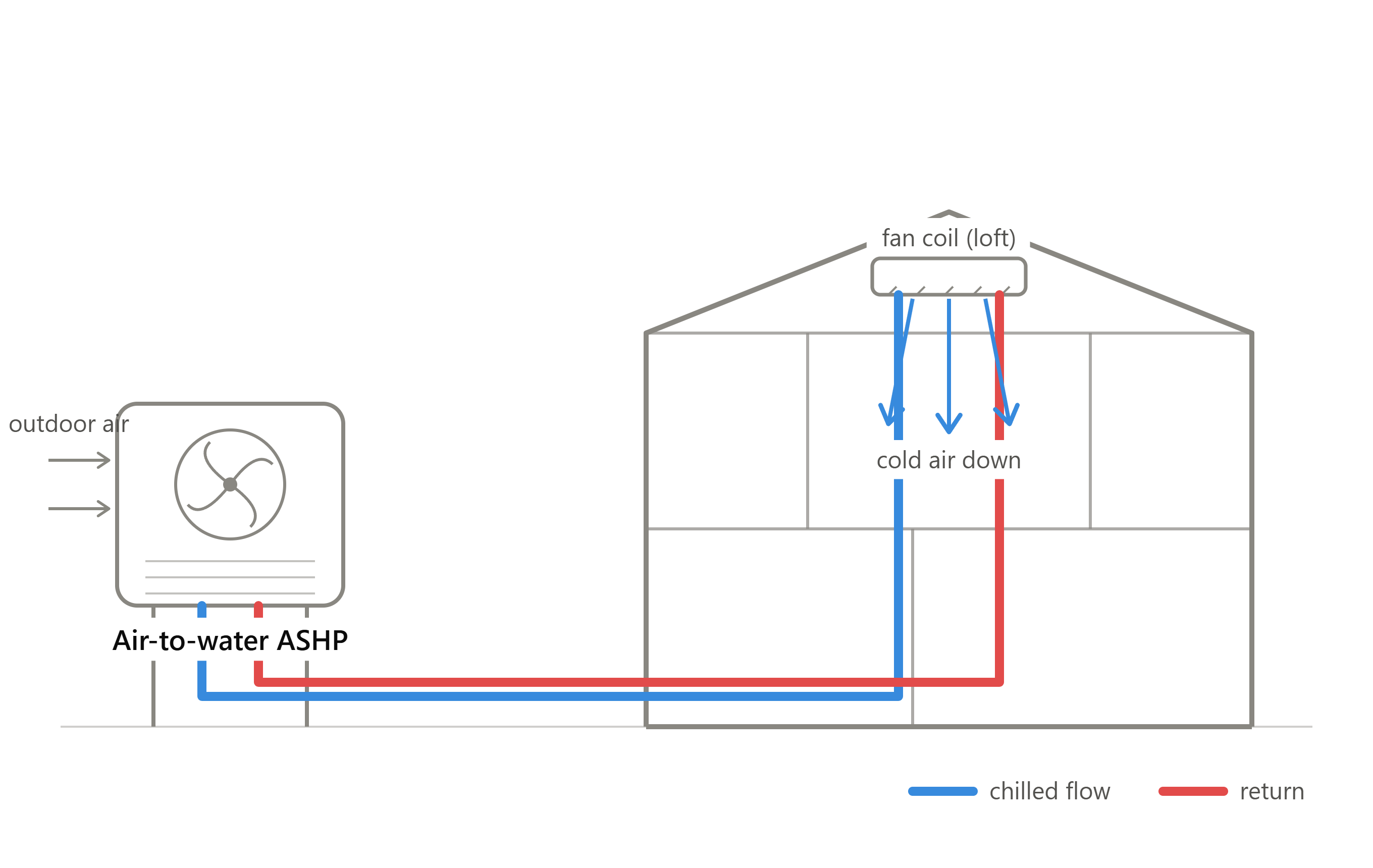
Either way, the coil sits in the loft, sucks in air from the landing, cools it and blows it into the bedrooms. I could also drop a duct or two to the ground floor (hiding them in wardrobes).
This is simplified of course. Just like we need to design a heating system, using flow rates and pressure drops, cooling needs the same treatment. That’s something for another blog post, once I know more about it.
What do I need?
To figure out what I needed from a fan coil, I needed to know how much cooling I needed and how much cooling I had access to.
I started by looking at my heat pumps specification sheet. It can delivery approximately 8kW of cooling with a 7.2°C flow temperature and a 12°C return temperature. 7.2°C was the coolest water it could provide, so that gave me what was available.
In terms of what was needed, I turned to a proper AC quote I had done a few years back. Back in 2022, I had a professional company come out and measure up for cooling in my office, bedrooms, sitting room and living room. For my own aspirations of cooling, if we could keep the bedrooms and my office at a sensible temperature, we were #winning
The office and three upstairs bedrooms needed 7.9kW of cooling based on their quote. What luck! I don’t know how they arrived at their figures, but it was the best I had to go on. I would simply divide the cold air between each room, based on their size. I would need an additional 8kW to cool the downstairs.
To put that 7.9kW into perspective, I only need about 7.5kW to heat the house!!! It seems bonkers to me that it takes more power to cool a property than it does to warm it up! A testament to the power of the sun!
In terms of installation, the fan coil would be installed in the loft with ducting to supply the colder air to the bedrooms, with the warm air coming from the landing. This means I won’t have any cooling downstairs, but as the heat is mainly a problem upstairs (home office and sleeping), this isn’t a deal breaker.
With a rough outline of what I wanted, I started researching. These units are very popular in commercial settings, but options are limited in the domestic space. Here are the units I found so far.
Unico Systems
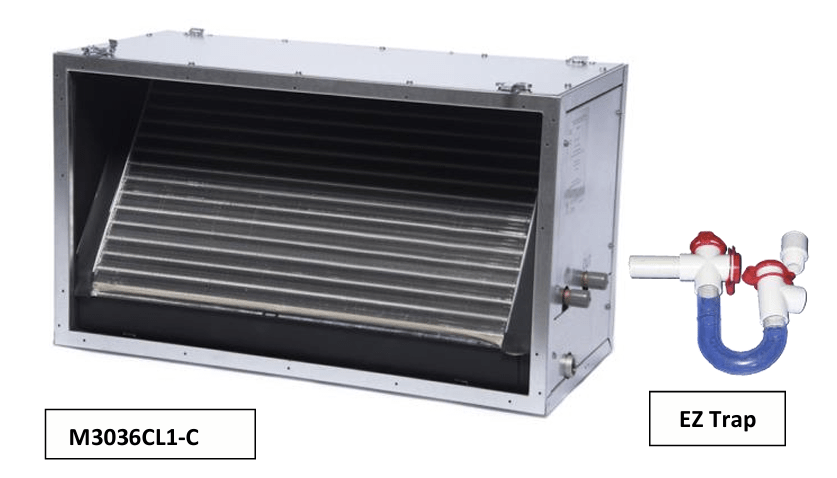
My installer recommended this company. They make a modular system, where the fan (or blower) is separate from the heating and cooling components. They make a chilled water coil. They are specified for water at 4.4 For me, I’d need the 3036 to provide the cooling at 7.2version (M3036CL1-C)
This unit is just the radiator, so it must be paired with an additional blower unit. The blower unit has variable speed (as best I can tell). A condensate tray seems to be required too.
What I like about these modular units is that individually they are quite small, so they’d be easier to lift into the loft.
I can’t find any GBP pricing on these units, but given the USD values I found, we’re probably looking at £1200 to £1500 for each unit, giving a total of £3,000 before ducting etc.
https://unicosystem.com/wp-content/uploads/2024/01/SB-M3036CL-C.001.pdf
Dalkin
The next unit I found is a combined unit, the Dalkin FWP17CT. This is a larger unit, since it’s all combined.
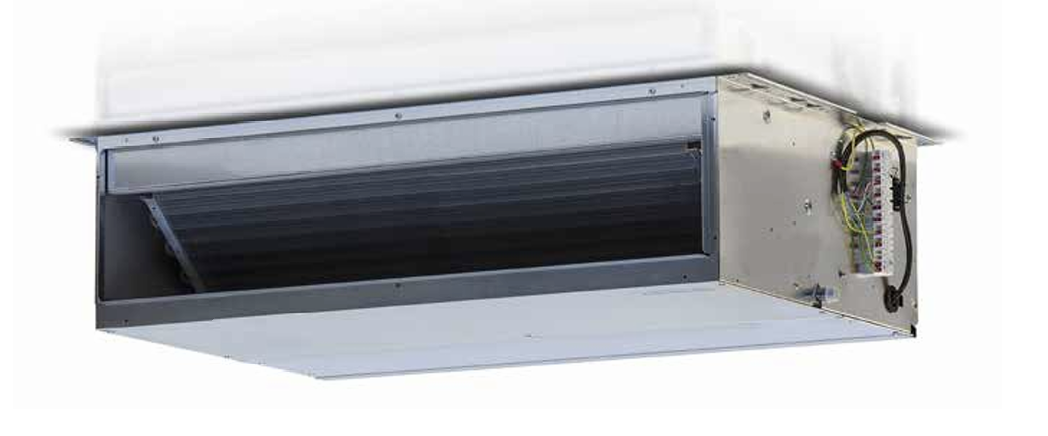
Price wise, this unit is around £1300.
Panasonic
Lastly, I found these Panasonic units, the “EC fan”. Unfortunately, the unit I found can only provide 6.7kW of cooling, but I suspect they do larger units.
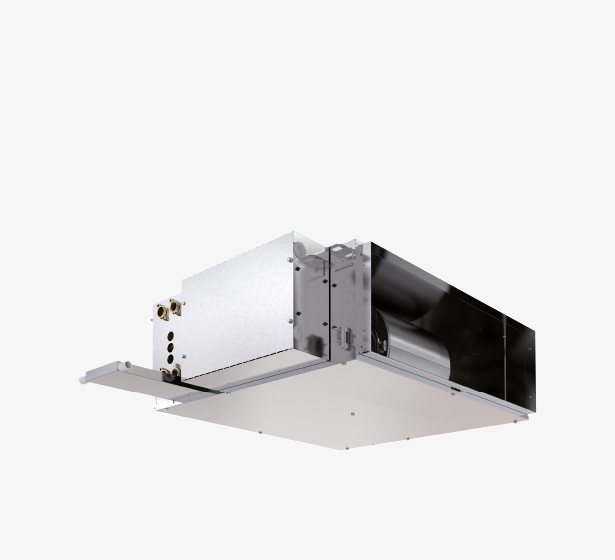
I couldn’t find any pricing.
Making a choice
At this stage, it’s too early to make any decisions. I need to get a handle on how much air I really need to deliver (m³/hr). More is probably more in this scenario, but I want to get a better understanding first.
I know what the heat pump can do, so I’m working backwards in that regard. 8kW isn’t enough cooling for the house, but if I can take advantage of it, it’s better than nothing.
Of course, I could go for an Air-to-Air heat pump, but after spending money on recently replacing the heating and more on installing UFH, it seems like the wrong choice. Not to mention the disruption that would be caused by installing it.
More to come!
I’m focused on getting my heat pump installed, so this is just something I have in the back of my mind at the moment. Once my heating and hot water are resolved, I’ll turn my attention back to the cooling. I doubt I’ll have it installed before the end of the summer, but who knows. If we have another heat wave on the cards for September, it might be worth getting ahead of it. Even crudely!
The first thing I need to lock down is the pipework. This is going to go in regardless of the fan coil I choose.
If you want to follow along, be sure to subscribe so you get notified of new posts.
Did you enjoy this post?
If you found this blog post useful and want to say thanks, you’re welcome to buy me a coffee.
Be sure to check out my YouTube Channel too – https://youtube.com/tomasmcguinness
Thanks,
Tom!


Leave a comment